-
×
 MSKCC Thoracic Pathology Course 2023 – On Demand
$45
MSKCC Thoracic Pathology Course 2023 – On Demand
$45 -
×
 Master Techniques in Rhinoplasty, 2nd edition (Videos Only)
$35
Master Techniques in Rhinoplasty, 2nd edition (Videos Only)
$35 -
×
 2020 Musculoskeletal Imaging In Clinical Practice
$30
2020 Musculoskeletal Imaging In Clinical Practice
$30 -
×
 The Comprehensive Harvard Medical School Diabetes Update 2021
$45
The Comprehensive Harvard Medical School Diabetes Update 2021
$45 -
×
 Perface Academy HARM (Hybrid Rhinoplasty Advanced Mentoring) 2. 2023
$55
Perface Academy HARM (Hybrid Rhinoplasty Advanced Mentoring) 2. 2023
$55

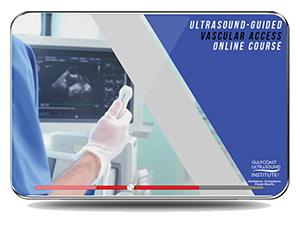
The Gulfcoast Ultrasound Guided Vascular Access: A Comprehensive Guide 2018
$20
The Gulfcoast Ultrasound Guided Vascular Access: A Comprehensive Guide 2018
YOU WILL GET THE COURSE VIA LIFETIME DOWNLOAD LINK (FAST SPEED) AFTER PAYMENT
Ultrasound Guided Vascular Access: A Comprehensive Guide Online Course is planned in accordance with the Agency for Healthcare Research & Quality (AHRQ), ACEP, and WINFOCUS guidelines. This online course is designed for medical professionals who perform central or peripheral line placement. This program combines a comprehensive review of ultrasound fundamentals, guidance techniques, ultrasound vessel differentiation, procedural set-up, in-plane and out-of-plane scanning techniques for performing central and peripheral line placement. This self-directed course is in a modular format and includes recommended reading assignments, online video lectures, case presentations, and online interactive quizzes. Enrollment is valid for 12 months (365 days) and begins the moment the participant is enrolled. Extend your online course access another 3 months with the addition of an onsite hands-on workshop or registration for a regularly scheduled GCUS scan workshop.
OBJECTIVES
– Explain the basic imaging principles of ultrasound used during guidance of vascular access.
– Discuss the advantages and disadvantages of the “In-Plane” and “Out-of-Plane” and the “Direct” vs. “Indirect” ultrasound-guided vascular access techniques..
– Differentiate venous vs. arterial anatomy by ultrasound.
– Relate ultrasound imaging characteristics of vessels and contiguous anatomy that indicate suitable approach for vascular access.
– Identify ultrasound imaging characteristics of thrombus or thrombophlebitic changes or other conditions that would indicate a vessel is not suitable for vascular access.
– Demonstrate the use of ultrasound guidance for Peripheral Line vascular access.
– Increase the participant’s knowledge to better perform ultrasound-guided vascular access procedures.
AUDIENCE
Physicians, mid-level providers, and nurses involved with performing vascular access for central and peripheral lines. Physician participants may include (but is not limited to) emergency, critical care, hospitalist, internal medicine, primary care.
Topics And Speakers:
– Fundamentals of UGVA
– Why Use Ultrasound Guidance?
– Direct vs’ Indirect Techniques
– In-plane vs’ Out of Plane Techniques
– Principles of Vessel Differentiation and Procedural Tips
– Ultrasound-Guided Central Line Placement
– IJ, Axillary/Subclavian and Femoral Vein Access
– Ultrasound-Guided Peripheral Line Placement
– Peripheral Line Placement
– Antecubital Vein Access
– Additional Access Sites
– Pediatric Patient
– Clinical Cases
– Ultrasound Probe Cover Demonstration
| Vendor |
|---|
Related products