-
×
 2017 imaging of frequently under recognized seronegative spondyloarthritis
$15
2017 imaging of frequently under recognized seronegative spondyloarthritis
$15 -
×
 Harvard Pulmonary and Critical Care Medicine 2021
$45
Harvard Pulmonary and Critical Care Medicine 2021
$45 -
×
 2020 Expert Series with John F. Feller, M.D. Updates in Prostate MRI Highlighting PI-RADS Classification, Imaging Techniques and Findings A One-on-One Tutorial
$20
2020 Expert Series with John F. Feller, M.D. Updates in Prostate MRI Highlighting PI-RADS Classification, Imaging Techniques and Findings A One-on-One Tutorial
$20 -
×
 Cleveland Clinic 29th Annual Diabetes Day 2025
$34
Cleveland Clinic 29th Annual Diabetes Day 2025
$34 -
×
 Harvard Pulmonary and Critical Care Medicine 2024
$25
Harvard Pulmonary and Critical Care Medicine 2024
$25 -
×
 A Core Curriculum in Adult Primary Care Medicine 2018-2019 Lecture Series
$30
A Core Curriculum in Adult Primary Care Medicine 2018-2019 Lecture Series
$30 -
×
 Gulfcoast Ultrasound Evaluation of Knee Pathology (Videos+PDFs)
$15
Gulfcoast Ultrasound Evaluation of Knee Pathology (Videos+PDFs)
$15 -
×
 EACVI Best of Imaging 2020 Congress (VIDEOS)
$15
EACVI Best of Imaging 2020 Congress (VIDEOS)
$15 -
×
 Harvard Infectious Diseases in Adults 2024
$10
Harvard Infectious Diseases in Adults 2024
$10 -
×
 ASE 2019 ACS Registry Review
$20
ASE 2019 ACS Registry Review
$20 -
×
 The Osler Plastic Surgery Certifying Exam Oral Review (Extracted 2024)
$40
The Osler Plastic Surgery Certifying Exam Oral Review (Extracted 2024)
$40


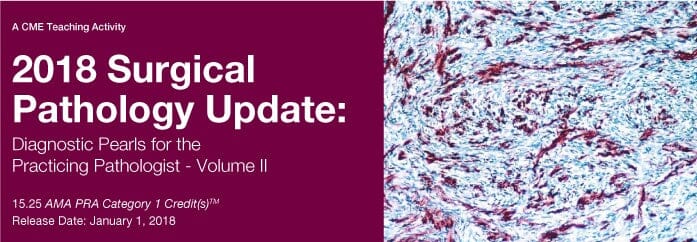
Surgical Pathology Update: Diagnostic Pearls for the Practicing Pathologist 2018
$20
Surgical Pathology Update: Diagnostic Pearls for the Practicing Pathologist 2018
By Educational Symposia – Docmeded
Details : 18 Videos
Size : 4.6 Gb
YOU WILL GET THE COURSE VIA LIFETIME DOWNLOAD LINK (FAST SPEED) AFTER PAYMENT
Educational Objectives
At the completion of this CME teaching activity, you should be able to:
- Develop an approach to common morphologic patterns seen in soft tissue tumors.
- Discuss the ancillary diagnostic approach to difficult soft tissue tumors including immunohistochemistry, molecular, and genetic diagnostic tests.
- Describe the most important diagnostic clues and patterns seen in soft tissue tumors which lead to a specific diagnosis.
- Explain the controversies regarding diagnostic criteria for Barrett’s esophagus and Barrett’s-related dysplasia.
- Discuss the effects of contemporary therapy on the pathology and management of patients with inflammatory bowel disease.
- Describe the role of the pathologist in helping to manage patients with IBD-related dysplasia and neoplasia.
- Apply risk stratification criteria for the prognostication of gastrointestinal stromal tumors.
- Discuss and recognize the succinate dehydrogenase-deficient gastrointestinal stromal tumor and understand the clinical significance of this category of GIST.
- Describe the transcription factors most useful for the identification of primary site location in metastatic carcinomas.
- Discuss the diagnostic markers for distinguishing hepatocellular carcinoma from metastatic carcinomas to the liver.
- Apply immunohistochemical markers to determine the primary site for metastatic well-differentiated neuroendocrine tumor.
- Accurately render a diagnosis of non-invasive follicular thyroid neoplasms with papillary-like nuclear features and recognize its mimics.
- Identify tumors with progression to poorly differentiated or anaplastic thyroid carcinoma.
- Recognize the morphologic spectrum of adrenal cortical carcinoma.
- Describe the features helpful in establishing a malignant diagnosis of prostate cancer on needle biopsy.
- Review the morphologic features essential in distinguishing benign mimickers from bladder cancer.
- Recognize unusual variants of common renal tumors and become familiar with more recently described renal tumors.
- Appreciate the subtle histomorphologic features that can help to distinguish well-differentiated ductal adenocarcinoma from reactive changes in the pancreas.
- Appreciate the anatomic and histologic compartments of the ampulla and their significance in the versatility and subclassification of ampullary tumors.
- Acquire knowledge of new concepts, terminology and histologic grading of pancreatic neuroendocrine tumor
Topics And Speakers:
Session 1
– A Contemporary Update of Colitis-associated Dysplasia
– Robert D. Odze, M.D., FRCPC
– The Evolution of Immunohistochemistry in Soft Tissue Tumor Pathology: From Differentiation to Molecular Genetics
– Jason L. Hornick, M.D., Ph.D.
Session 2
– Barrett’s Esophagus: Controversial Diagnostic Issues Relevant to Pathologists
– Robert D. Odze, M.D., FRCPC
– Helpful Tips for Resolving Differential Diagnostic Consideration on Prostate Biopsy
– Cristina Magi-Galluzzi, M.D., Ph.D.
Session 3
– Mesenchymal Tumors of the Gastrointestinal Tract: An Update on GIST and Differential Diagnosis Using Immunohistochemistry
– Jason L. Hornick, M.D., Ph.D.
– A Guide to Noninvasive Follicular Thyroid Neoplasm with Papillary-like Nuclear Features (NIFTP)
– Justine Barletta, M.D.
Session 4
– Update on Ampulla and Gallbladder Pathology
– N. Volkan Adsay, M.D.
– Role of the Pathologist in Diagnosing and Managing Patients with IBD
– Robert D. Odze, M.D., FRCPC
– Metastatic Carcinoma of Unknown Primary: Diagnostic Approach Using Immunohistochemistry
– Jason L. Hornick, M.D., Ph.D.
Session 5
– Diagnostic Pitfalls in Bladder Pathology
– Cristina Magi-Galluzzi, M.D., Ph.D.
– Potential Pitfalls in Thyroid Pathology
– Justine Barletta, M.D.
Session 6
– The Trouble with Fat: Diagnostic Issues with Well-Differentiated Lipomatous Tumors
– John R. Goldblum, M.D.
– Neuroendocrine Tumors of the Gastrointestinal and Pancreatobiliary Tracts
– N. Volkan Adsay, M.D.
Session 7
– Common Renal Cell Neoplasms and Their Differential Diagnosis
– Cristina Magi-Galluzzi, M.D., Ph.D.
– Common Morphologic Patterns in Soft Tissue Tumors: Part 1
– John R. Goldblum, M.D.
Session 8
– Common Morphologic Patterns in Soft Tissue Tumors: Part 2
– John R. Goldblum, M.D.
– A Case-Based Approach to Tumors of the Adrenal Gland and Paraganglia
– Justine Barletta, M.D.
– Differential Diagnosis of Pancreatic Tumors
– N. Volkan Adsay, M.D.
| Vendor |
|---|
Related products