-
×
 AAN APP Pre Conference On Demand 2024
$50
AAN APP Pre Conference On Demand 2024
$50 -
×
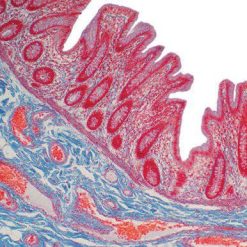 Current Topics in Gastrointestinal and Liver Pathology 2022
$50
Current Topics in Gastrointestinal and Liver Pathology 2022
$50 -
×
 AAN 2024 Fall Conference On Demand
$120
AAN 2024 Fall Conference On Demand
$120 -
×
 EACVI Cardiac Magnetic Resonance Tutorials 2018
$20
EACVI Cardiac Magnetic Resonance Tutorials 2018
$20 -
×
 The Brigham Board Review in Rheumatology 2018
$10
The Brigham Board Review in Rheumatology 2018
$10 -
×
 2019 Classic Lectures in Body Imaging with MR
$40
2019 Classic Lectures in Body Imaging with MR
$40 -
×
 USCAP Head and Neck Pathology: Top to Bottom Training to Avoid the Ups and Downs 2022
$75
USCAP Head and Neck Pathology: Top to Bottom Training to Avoid the Ups and Downs 2022
$75 -
×
 AIUM Quantitative Imaging Biomarkers Alliance – Progress Report on Shear Wave Speed, Volume Flow, and Contrast-Enhanced Ultrasound 2020
$20
AIUM Quantitative Imaging Biomarkers Alliance – Progress Report on Shear Wave Speed, Volume Flow, and Contrast-Enhanced Ultrasound 2020
$20 -
×
 2021 Magnetic Resonance Imaging: MRI of the Body & Heart - A Video CME Teaching Activity
$55
2021 Magnetic Resonance Imaging: MRI of the Body & Heart - A Video CME Teaching Activity
$55 -
×
 Perface Academy HARM (Hybrid Rhinoplasty Advanced Mentoring) 2. 2023
$55
Perface Academy HARM (Hybrid Rhinoplasty Advanced Mentoring) 2. 2023
$55

ARRS Contrast Reaction: Now What Do I Do? 2017
$35
ARRS Contrast Reaction: Now What Do I Do? 2017
Full Video Course
YOU WILL GET THE COURSE VIA LIFETIME DOWNLOAD LINK (FAST SPEED) AFTER PAYMENT
There are few clinical situations in most radiology practices or departments that require immediate medical intervention from a radiologist. The management of an adverse contrast reaction is one such situation. Some radiologists feel ill- prepared as “first responders” managing the first few critical minutes of life-threatening reactions until the rapid response team can arrive and take over caring for the patient.
This online course will present 14 clinical scenarios across two modules to better prepare radiologists in identifying and managing severe contrast reactions until the necessary clinical help arrives.
Earn credit at your own pace through June 28, 2021 and continue to access your videos until June 29, 2028. See below for learning outcomes and a list of modules and individual lectures.
Learning Outcomes and Lectures
After completing this course, the learner should:
- be prepared and confident in the management of contrast media reactions, and in particular, the management of severe life-threatening contrast reactions
- describe the methods of evaluation and treatment of various contrast media reactions and the clinical indications for and doses of medication used
- discuss and review standard and acceptable alternative methods and doses of medications used in the prophylaxis of severe contrast media reactions in at-risk individuals
Part 1
- Clinical Scenarios/Overview—M. Parker, MD
- Scenario I: Mild Physiologic Reaction to Contrast Media—K. Beckett, MD
- Scenario II: Contrast–Induced Bronchospasm—K, Beckett, MD
- Scenario III: Contrast-Induced Laryngeal Edema —J. Pahade, MD
- Scenario IV: Contrast-Induced Hypotension w/ Bradycardia—J. Pahade, MD
- Scenario V: Contrast-Induced Anaphylactoid Reaction—G. Salazar, MD
- Scenario VI: Pre-Medicated Patients/Shellfish Allergies—M. Sakala, MD
Part 2
- Scenario 1: Contrast-Induced Neurotoxicity—M. Parker , MD
- Scenario 2: Lung Edema—G. Salazar , MD
- Scenario 3: Hypoglycemia—J. Pahade, MD
- Scenario 4: Infiltrations: Minor—K. Beckett , MD
- Scenario 5: Infiltrations: Major—K. Beckett, MD
- Scenario 6: Escalating Reaction—G. Salazar , MD
- Scenario 7: Management Errors—J. Pahade , MD
- Scenario 8 Premedication: Elective—M. Sakala, MD
| Vendor |
|---|
Related products