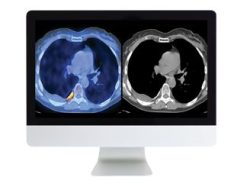
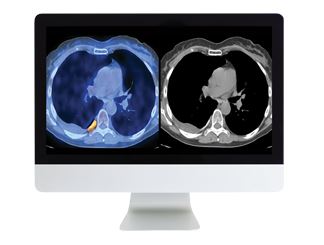
 ARRS Practical PET/CT: What You Need to Know
  Perface Academy HARM (Hybrid Rhinoplasty Advanced Mentoring) 2. 2023

ARRS Practical PET/CT: What You Need to Know
$35
ARRS Practical PET/CT: What You Need to Know
Full Video Course
YOU WILL GET THE COURSE VIA LIFETIME DOWNLOAD LINK (FAST SPEED) AFTER PAYMENT
PET/CT is an essential imaging study, largely serving the fields of oncology and neurology, that combines the sensitivity of providing physiologic data about pathologic conditions with the diagnostic capability of CT. This course focuses on many important practical issues in PET/CT, optimizing PET/CT protocols and image production, as well as interpretation and optimizing communication. Particular attention is placed on the most recent updates and role of PET/CT in cancers diagnosis and treatment. Updates in dementia imaging with amyloid agents and F18-FDG are also discussed.
Earn credit at your own pace through November 6, 2020 and continue to access your videos until November 7, 2027. See below for detailed information and learning outcomes.
Learning Outcomes and Modules
After completing this course, the learner should be able to:
- describe the appropriate use of PET/CT including oncologic and neurologic indications
- identify normal variants and pitfalls that can confound PET/CT interpretation
- discuss the latest updates in using PET/CT in a variety of cancers
- describe how to interpret PET/CT systematically
- dictate reports
Module 1
- History of PET and Clinical Overview—Marc Seltzer, MD
- Importance of Patient Preparation—Don Yoo, MD
- Optimizing PET/CT Protocols—Terence Wong, MD, PhD
- Improving Your PET/CT Practice: Lessons Learned in Clinical Practice—Harry Agress, MD
Module 2
- Important Normal Variants and Pitfalls I—Esma Akin, MD
- Important Normal Variants and Pitfalls II—Katherine Zukotynski, MD
- PET/CT for Infection and Inflammation—Don Yoo, MD
Module 3
- Update on PET/CT in Lung Cancer—Rathan Subramaniam, MD, PhD
- Update on PET/CT in Lymphoma—Katherine Zukotynski, MD
- Update on PET/CT in Head and Neck Cancer—Marc Seltzer, MD
Module 4
- Update on PET/CT in GU Malignancies—Mark Nathan, MD
- Update on PET/CT in Prostate Cancer—Mark Nathan, MD
- Interpreting F18-FDG and Strategies for Challenging Cases—Phillip Kuo, MD, PhD
- Moving to the Next Level: What Defines a True PET/CT Expert—Harry Agress, MD
Module 5
- Update on PET/CT in Melanoma—Eric Rohren, MD
- Update on PET/CT in GYN Malignancies—Esma Akin, MD
- PET/CT for Evaluation of Treatment Response—Rathan Subramaniam, MD, PhD
- Update on the Role of Amyloid Imaging and Interpretation—Phillip Kuo, MD, PhD
Module 6
- How to Generate a Great PET/CT Report—Eric Rohren, MD
- Important New Developments in PET—Terence Wong, MD, PhD
- The Most Instructive and Challenging PET/CT Cases—Don Yoo, MD
| Vendor |
|---|
Related products